
Central Texas Plumbing Pros

Leak Detection in Pflugerville & Austin, TX
Testing and locator equipment to find hidden leaks before opening a wall or slab.
Central Texas Plumbing Pros
Find the Leak Before It Causes More Damage
A water leak does not always show itself as a puddle. It can hide inside a wall, under a slab, or in a yard, and the first sign may be a higher water bill, a damp spot, a musty smell, or the sound of running water when every tap is off. Central Texas Plumbing Pros provides leak detection for homes in Pflugerville, Round Rock, Georgetown, Cedar Park, Austin, Leander, Kyle, Buda, San Marcos, Dripping Springs, Lakeway, and Hutto. The work is performed by a licensed Texas Master Plumber, license RMP-46935.
Finding a leak is a separate step from fixing it. Opening a wall or floor in the wrong place adds damage and cost without solving the problem. Leak detection uses observation, testing, and locator equipment to narrow down where water is coming from, so the repair can be targeted to the right pipe and location.
Leak detection is available Monday through Friday, 8 AM to 6 PM. To schedule a visit, call (512) 629-6402 or email CentralTexasPlumbingPros@gmail.com. After testing, you will be told what was found, where the leak is believed to be, and what repair options exist, in plain language.
Signs You May Have a Hidden Leak
A visible leak at a faucet or a toilet is easy to spot, but a hidden leak takes longer to notice. Watch for a water bill that rises without a change in use, a water meter that moves when no water is running, damp carpet or flooring, a warm spot on a floor, a wall that feels damp or shows staining, peeling paint, or a musty smell that does not go away after cleaning. Outside, a leak may show as a soggy patch of yard, a sinkhole, or grass that grows faster in one area.
Central Texas hard water is also a factor in leaks over time. Mineral-heavy water can shorten the life of fixtures, valves, and supply lines, and a worn supply line under a sink or behind a toilet can fail without warning. Checking flexible supply lines for bulges, fraying, rust, or green crust is a simple, useful habit.
- A water bill that increases without a clear reason
- The sound of running water when all taps and appliances are off
- Damp, stained, or warm spots on floors, walls, or ceilings
- Musty odors, mold, or mildew that keep returning
- Low water pressure, or air sputtering from a tap
- A wet or unusually green patch in the yard
How Leak Detection Works: Testing, Locators, and Static Testing
A leak detection visit usually starts with questions and a walk-through: when the signs first appeared, whether the leak seems tied to hot or cold water, whether it is worse after a shower or laundry, and where dampness or damage has been seen. The meter is often checked first, to confirm that water is moving when it should not be. Isolating sections then helps narrow the leak to a hot-water line, a cold-water line, or a drain line.
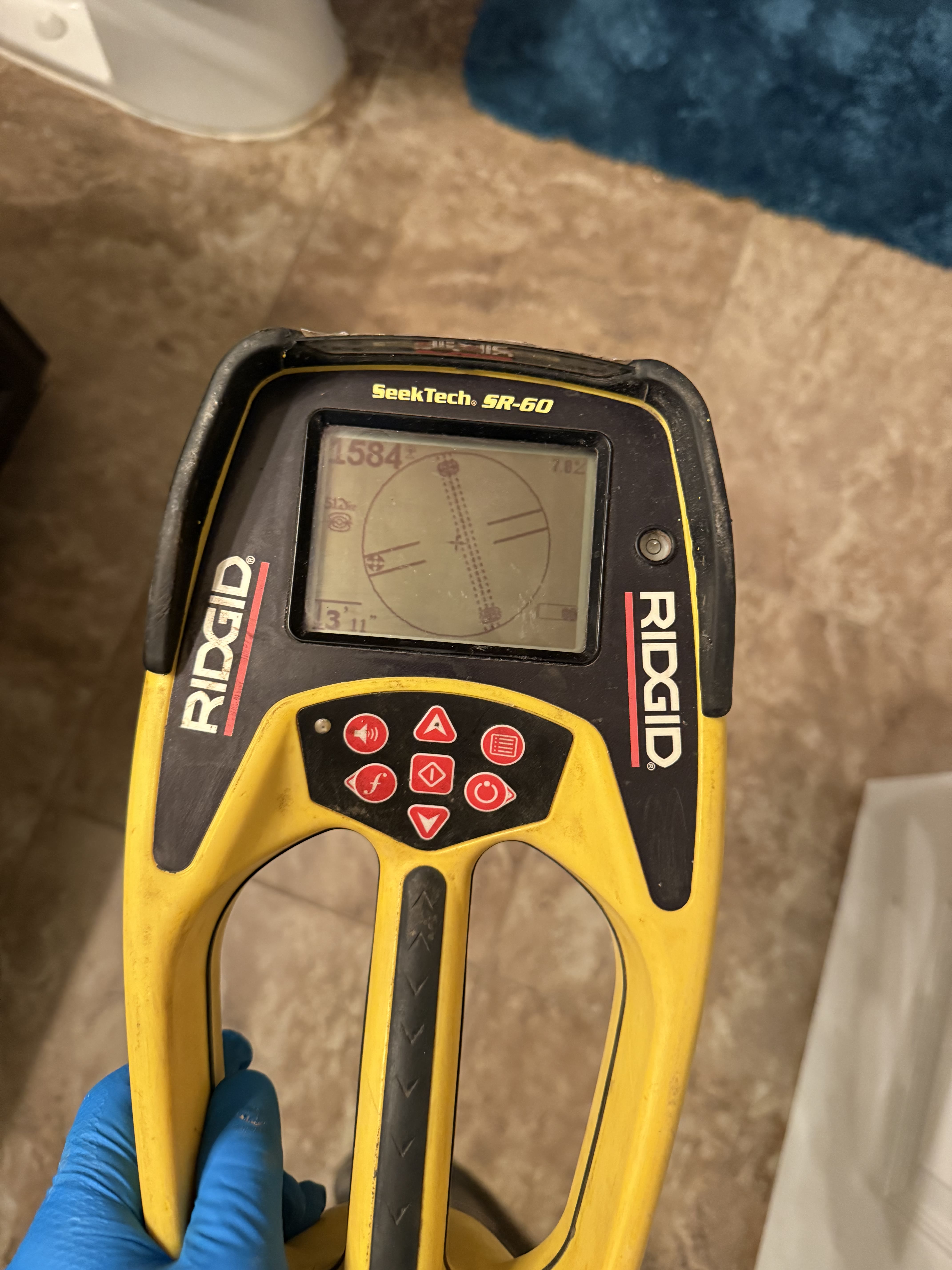
Locator equipment and listening equipment are used to trace a water line and listen for the sound of water escaping from a pipe. A camera can also be used where a drain or sewer line is suspected. For a suspected slab leak, the location matters even more, because the pipe is under concrete and the repair may involve opening the slab or rerouting the line.
Static testing is another tool used for drain and sewer lines. In a static test, the drain, waste, and vent system is filled with water to slab level and held stagnant for a set period, usually 15 minutes, to see whether the water level drops. A drop points to a leak in that system. Static testing can also be used to isolate a problem to one part of the system, such as a shower pan, before a repair is planned. Testing is chosen based on the signs, the type of pipe suspected, and the layout of the home.
What Happens After a Leak Is Found
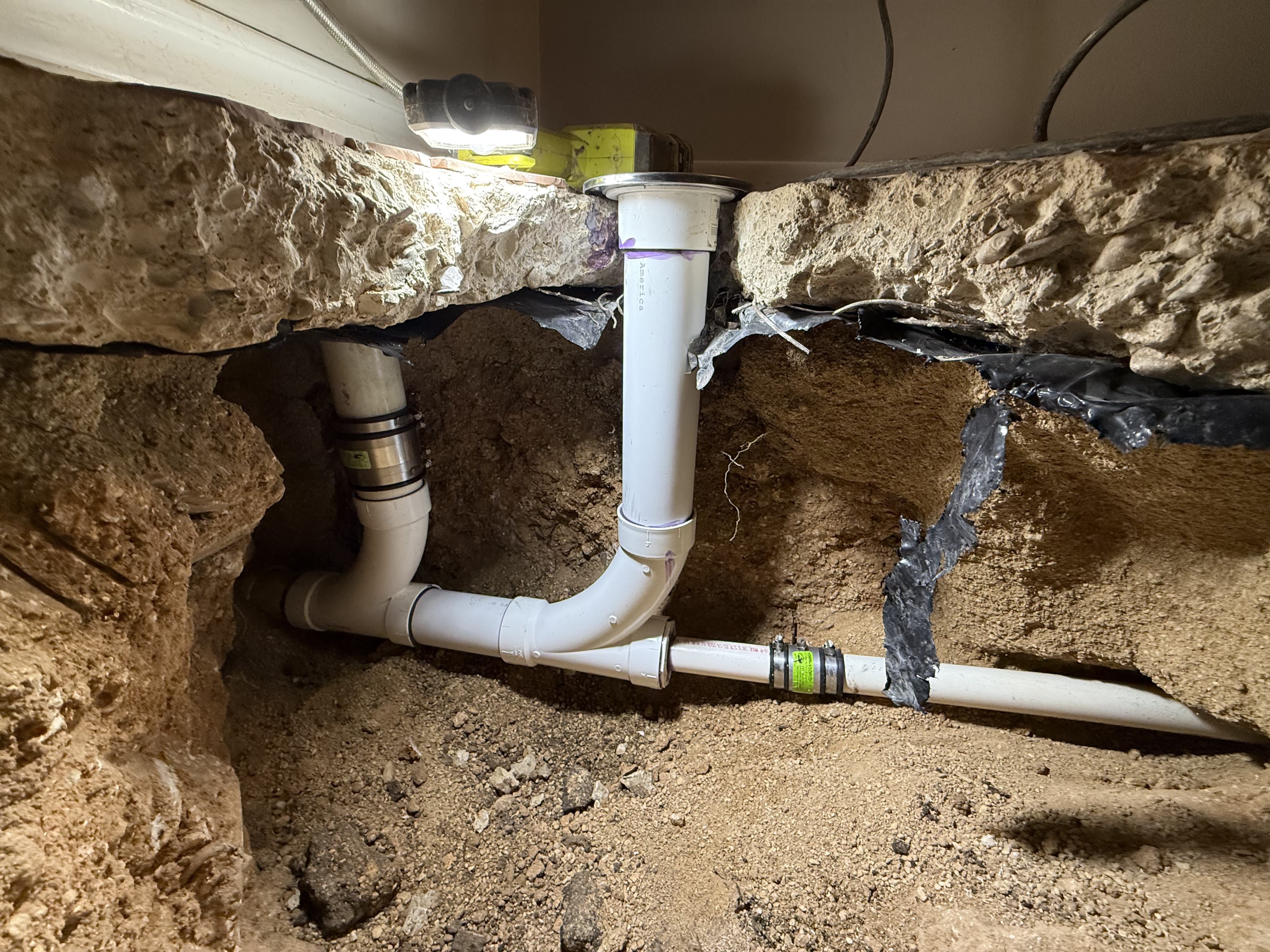
Once a leak is located, the repair depends on the pipe, its location, and its condition. A supply-line leak in an accessible wall may be a straightforward pipe repair. A slab leak may be repaired at the leak point, or the affected line may be rerouted above the slab, depending on access, the condition of the rest of the line, and the cost and disruption of each option. Both options are explained before work starts.
A drain or sewer leak is a different kind of repair, and it may involve camera inspection and, in some cases, sewer line repair. The leak detection findings help decide whether the next step is a spot repair, a section replacement, or a reroute. If the leak has caused water damage to flooring, drywall, or cabinets, that damage is noted, so you can plan for drying and repair as a separate step.
After a repair, the line is tested again to confirm the leak is stopped and water pressure and flow are normal. The area is checked for dampness, and you will be told what was repaired and what to watch for. A single leak does not always mean the rest of the system is failing, but if several leaks appear in the same older system, that pattern is worth discussing.
Common questions
Leak Detection in Pflugerville & Austin, TX FAQs
How do you find a leak I cannot see?
The visit starts with checking the water meter and isolating sections of the system to narrow the leak to a hot-water line, a cold-water line, or a drain line. Locator and listening equipment are then used to trace the line and pinpoint the leak. A camera or a static test may also be used when a drain or sewer line is suspected.
What is a slab leak?
A slab leak is a leak in a water or drain line under the concrete slab of a home. Signs can include a warm spot on the floor, damp flooring, a higher water bill, or the sound of running water when all taps are off. Because the pipe is under concrete, pinpointing the location before opening the slab is important.
What is a static test?
A static test fills the drain, waste, and vent system with water to slab level and holds it stagnant for 15 minutes to see whether the water level drops. A drop points to a leak in that system. It is used to test and isolate drain and sewer lines.
What are your hours for leak detection?
Central Texas Plumbing Pros is open Monday through Friday, 8 AM to 6 PM. To schedule a visit, call (512) 629-6402 or email CentralTexasPlumbingPros@gmail.com.
Need leak detection?
Call to talk through your plumbing needs and schedule service.