Central Texas Plumbing Pros
Water Heaters in Pflugerville & Austin, TX
Repair, replacement, flushing, and descaling for tank and tankless water heaters.
Central Texas Plumbing Pros
Hot Water, Repaired or Replaced With Clear Options
A water heater is easy to ignore until the shower turns cold, the water runs out too fast, or a puddle appears near the tank. Central Texas Plumbing Pros works on both tank and tankless water heaters, including repair and replacement, for homes in Pflugerville, Round Rock, Georgetown, Cedar Park, Austin, Leander, Kyle, Buda, San Marcos, Dripping Springs, Lakeway, and Hutto. The work is performed by a licensed Texas Master Plumber, license RMP-46935.
Central Texas has hard, mineral-heavy water, and that matters for water heaters. Minerals settle in a tank and build up inside a tankless unit over time. That buildup can shorten the life of a heater, reduce efficiency, and make a unit work harder to heat the same amount of water. Regular flushing for a tank heater and descaling for a tankless heater help manage that buildup, and both are part of routine water heater care.
Water heater service is available Monday through Friday, 8 AM to 6 PM. To schedule a visit, call (512) 629-6402 or email CentralTexasPlumbingPros@gmail.com. After an inspection, you will be told what is wrong, whether repair or replacement makes more sense for that unit, and what the work involves, in plain language.
Signs Your Water Heater Needs Attention
Some water heater problems are obvious, such as no hot water at all or water leaking from the tank. Others are gradual: hot water that runs out sooner than it used to, water that is only lukewarm, a unit that cycles on and off more often, or noises such as popping, rumbling, or banging from a tank. Those noises are often linked to sediment buildup at the bottom of a tank.
Rusty or discolored hot water can come from the heater itself or from the water supply, and the source matters for the fix. A leak at the base of a tank is also different from a leak at a pipe connection or a valve. An inspection looks at the unit, its connections, the venting or gas supply where applicable, and the water around it, so the problem is identified before parts are replaced.
- No hot water, or hot water that runs out too quickly
- Lukewarm water, or water temperature that changes during a shower
- Rusty, cloudy, or bad-smelling hot water
- Popping, rumbling, or banging sounds from the tank
- Water pooling around the base of the heater, or dampness on nearby walls or flooring
- A pilot light that will not stay lit, or a tankless unit showing an error
Repair or Replacement: Tank and Tankless Options
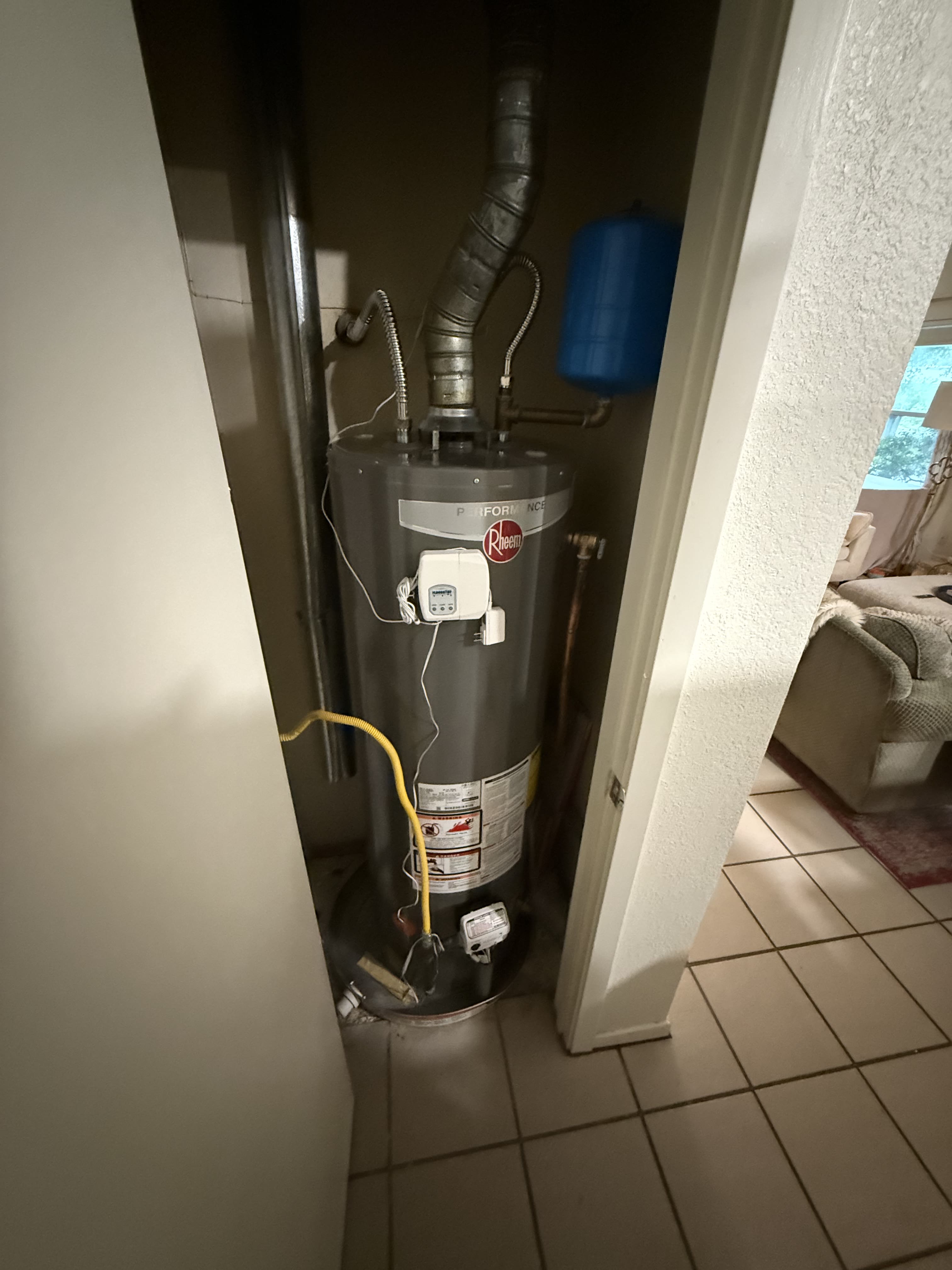
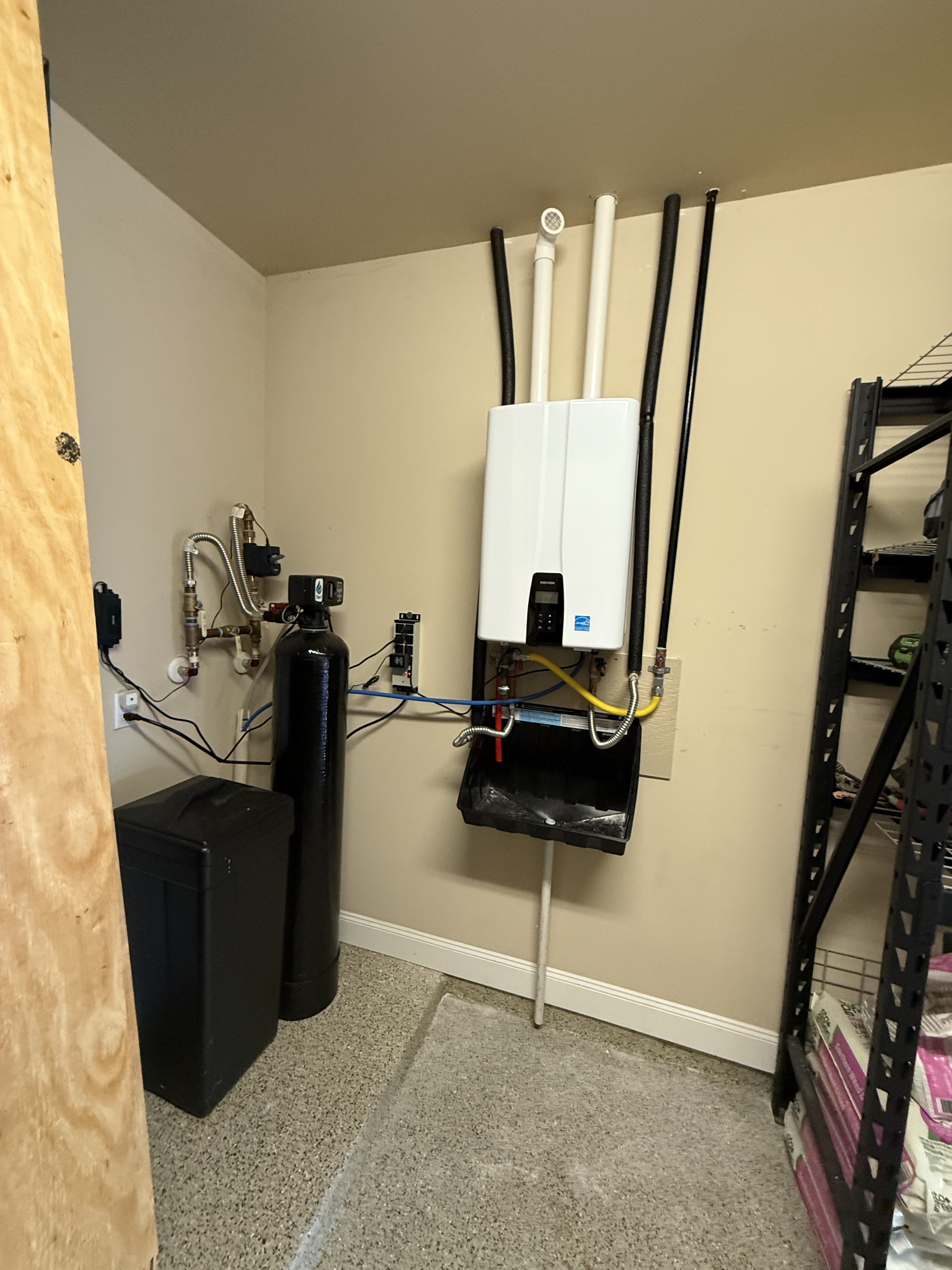
A tank water heater stores a set amount of hot water and keeps it ready to use. A tankless water heater heats water only when a tap is opened, so it does not store a tank of hot water. Each type has trade-offs in space, hot-water capacity, and maintenance, and the right choice depends on the size of the household, how hot water is used, and the existing gas, electric, venting, and water connections in the home.
Repair makes sense when the problem is a single failed part, such as a thermostat, heating element, igniter, or valve, and the rest of the unit is in good condition. Replacement is usually considered when a tank is leaking, when the unit is old and repairs keep adding up, or when a household needs more hot-water capacity than the current unit can provide. A leaking tank itself is not normally repairable, because the tank is the pressure vessel that holds the water.
Replacement work includes removing the old unit, installing the new unit, and connecting water, gas or electric supply, venting, and discharge piping to code. The area, connections, and operation of the new unit are checked before the visit ends. If you are considering a change from tank to tankless, or the reverse, the existing venting, gas line size, and electrical supply are part of that decision.
Flushing, Descaling, and Hard Water Care
For a tank water heater, flushing means draining sediment and mineral buildup from the bottom of the tank. For a tankless water heater, descaling means circulating a cleaning solution through the heat exchanger to remove mineral scale. Both help the unit heat water more efficiently and reduce strain on the parts that do the heating.
In Central Texas, hard water makes this maintenance more important, not less. Mineral scale forms faster in hard water, and a tankless unit in particular can lose performance or show errors when scale builds up inside the heat exchanger. How often flushing or descaling is needed depends on water hardness, household use, and the manufacturer's guidance for that model.
Maintenance does not make a worn-out heater new again, and it does not fix a leaking tank. It is a practical step for a unit that is otherwise in good working order. If a heater is already showing signs of age, that is discussed alongside the maintenance, so you can plan for replacement.
Common questions
Water Heaters in Pflugerville & Austin, TX FAQs
Should I repair or replace my water heater?
Repair is often the right step when one part has failed and the rest of the unit is in good condition. Replacement is usually considered when the tank is leaking, when repairs keep repeating, or when the household needs more hot water than the current unit can provide. An inspection of the unit and its age and condition helps make that decision.
What is the difference between a tank and a tankless water heater?
A tank water heater stores hot water and keeps it ready to use. A tankless water heater heats water only when a tap is opened and does not store hot water. The choice depends on household size, hot-water use, space, and the existing gas, electric, venting, and water connections.
Why does hard water matter for my water heater?
Central Texas water is hard and mineral-heavy. Minerals settle in a tank and form scale inside a tankless unit, which can reduce efficiency and shorten the life of the heater. Flushing a tank heater and descaling a tankless heater help manage that buildup.
What are your hours for water heater service?
Central Texas Plumbing Pros is open Monday through Friday, 8 AM to 6 PM. To schedule a visit, call (512) 629-6402 or email CentralTexasPlumbingPros@gmail.com.
Need water heaters?
Call to talk through your plumbing needs and schedule service.