Customer review
Matthew and his guys did an awesome job, took our situation personally, something like that for us is very important. Thank you so much for all the work you did.
Marvin Shelton

Central Texas Plumbing Pros

Camera inspection, static testing, and repair for sewer line problems.
Central Texas Plumbing Pros
A sewer line carries wastewater from a home to the city sewer or septic system, and it is buried, so a problem is often noticed only when drains slow down across the house, a toilet backs up, or an odor appears in a yard. Central Texas Plumbing Pros provides sewer line camera inspection, static and isolation testing, repair, and replacement for homes in Pflugerville, Round Rock, Georgetown, Cedar Park, Austin, Leander, Kyle, Buda, San Marcos, Dripping Springs, Lakeway, and Hutto. The work is performed by a licensed Texas Master Plumber, license RMP-46935.
Sewer work should start with a diagnosis, not digging. A camera inspection can show what is wrong inside the line, and testing can confirm whether the problem is in the sewer line or another part of the drain system. That information helps decide whether a cleaning, a spot repair, a section replacement, or a full replacement is the right step.
Sewer line service is available Monday through Friday, 8 AM to 6 PM. To schedule a visit, call (512) 629-6402 or email CentralTexasPlumbingPros@gmail.com. After inspection and testing, you will be told what was found, where the problem is, and what the repair options are, in plain language.
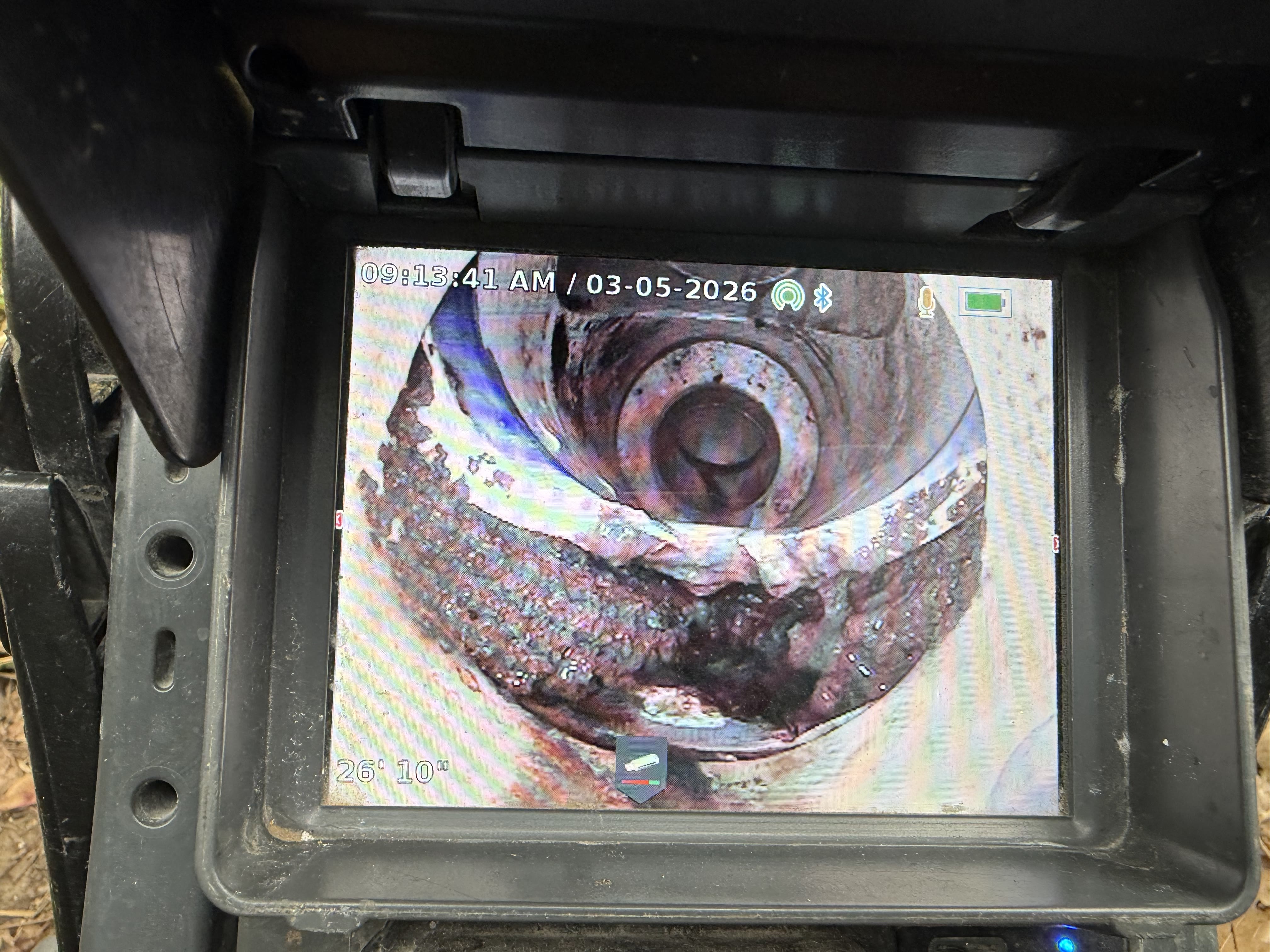
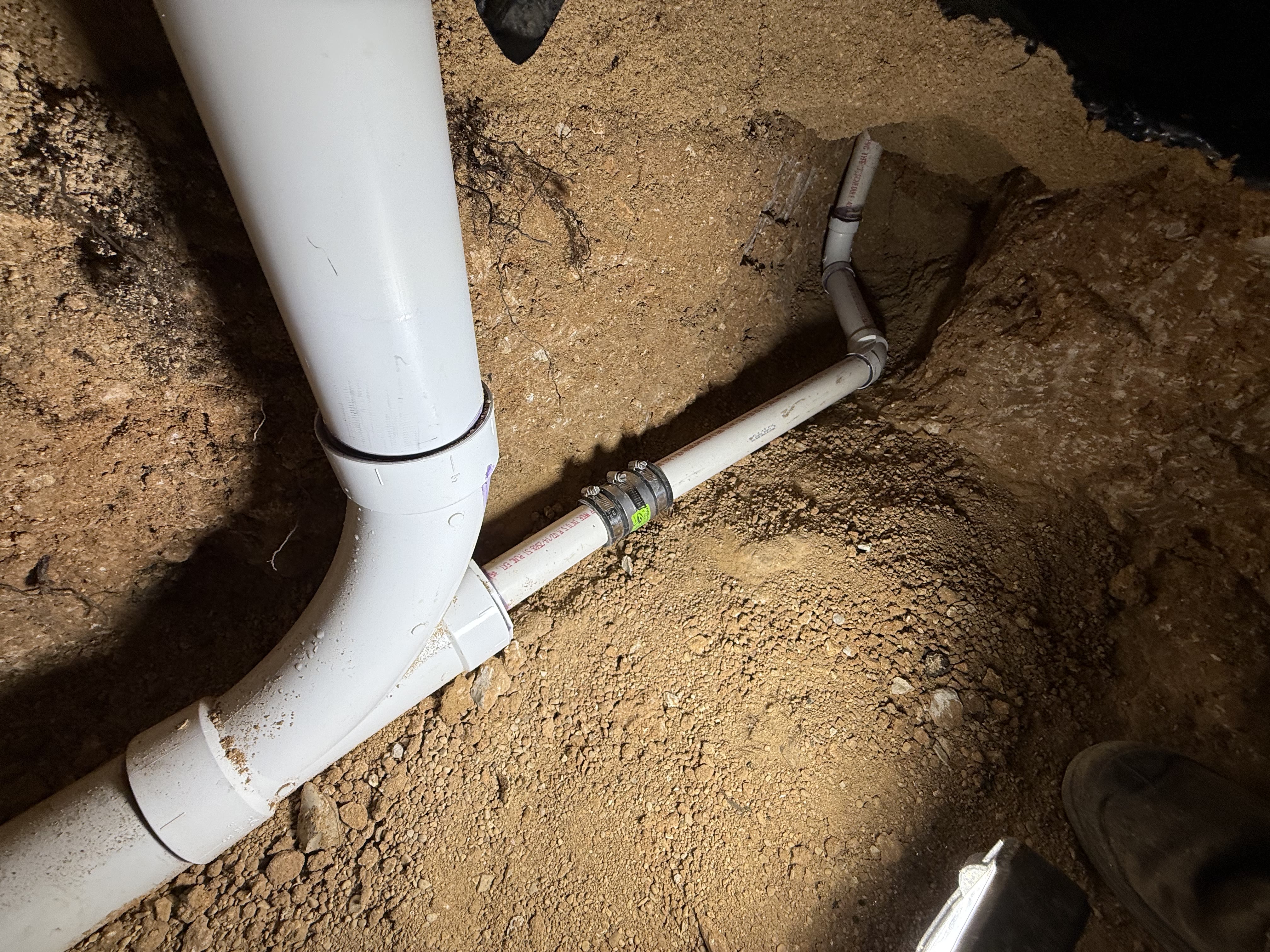
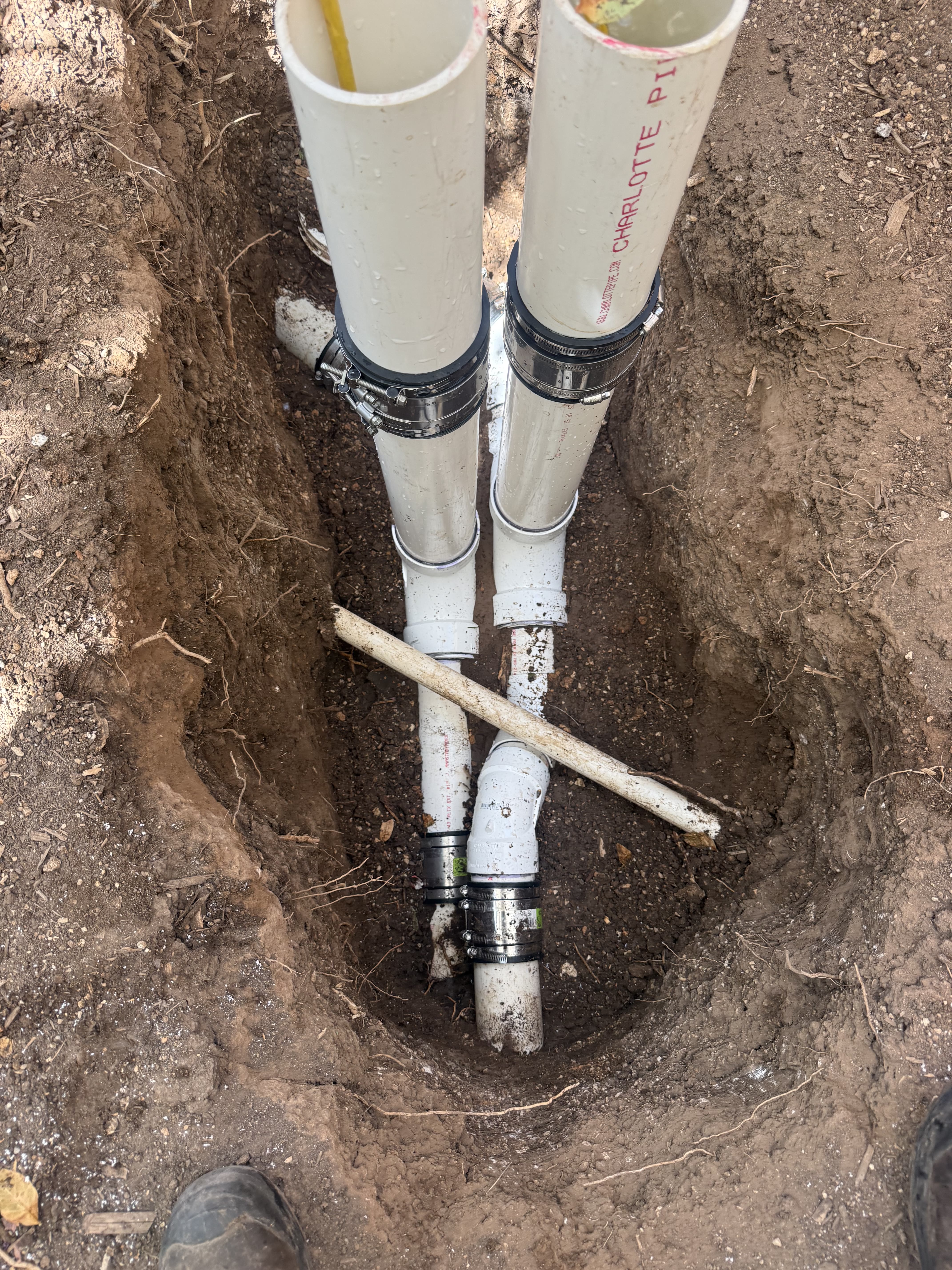
A single slow drain usually points to that fixture or its branch line. A sewer line problem is more likely when several drains are affected at once, when a toilet backs up into a tub or shower, when drains gurgle after flushing or running laundry, or when sewage odors appear inside or outside the home. A soggy patch of yard, a sinkhole, or grass that grows faster in one area can also point to a leak in a buried sewer line.
Tree roots are a common cause of sewer line problems in Central Texas, because roots seek water and can enter a line through a joint or a small crack. Over time, roots can block flow and widen the opening. Other causes include a broken or separated pipe, a sag or belly where waste collects, or a pipe that has shifted with soil movement. A camera inspection is the practical way to tell which of these is present.
A sewer camera inspection sends a small camera through the line, usually through a cleanout, so the inside of the pipe can be seen directly. It can show roots, a break, a separated joint, a belly, heavy buildup, or a collapsed section, and it can show how far the problem is from the access point. That distance and location matter for planning a repair, because they determine how much digging or access is needed.
Static testing and isolation testing are used to confirm a leak or to narrow a problem to one part of the system. In a static test, the drain, waste, and vent system is filled with water to slab level and held stagnant for 15 minutes to see whether the water level drops. Isolation testing goes further by testing sections separately, for example to tell whether a problem is in a shower pan or in the main sewer line. Testing is useful when a camera alone does not fully explain the symptoms, or when a leak needs to be confirmed before a repair is planned.
The results are explained in plain terms, including the location of the problem and whether the issue is limited to one spot or spread through the line. That is the basis for a repair plan, rather than a guess based on symptoms alone.
A sewer line repair depends on what the camera and testing showed. A single broken or separated section can often be repaired as a spot repair, with digging limited to that area. A line with several breaks, a long sag, or widespread deterioration may need a section replacement or a full replacement. The pipe material, depth, and location all affect the work and the disruption involved.
A cleanout is an access point in the sewer line, usually outside the home, that allows a camera or a drain cable to enter the line without removing a toilet or opening a wall. If a home does not have a usable cleanout, installing one can make future cleaning and inspection easier and less disruptive. A finished cleanout is set at grade and capped, so it is accessible when needed.
After a repair or replacement, the line is tested and water is run through the fixtures to confirm flow is normal. The work area is checked, and you will be told what was replaced, what material was used, and what to watch for. Keeping grease, wipes, and large amounts of food waste out of drains helps protect a repaired line.
Marvin Shelton
Common questions
A single slow fixture usually points to a drain problem near that fixture. When several fixtures are slow, gurgling, or backing up at the same time, the problem is more likely in a shared drain or the main sewer line. A camera inspection can show the inside of the line and help tell the difference.
A camera inspection can show roots, a break, a separated joint, a sag or belly, heavy buildup, or a collapsed section, and how far the problem is from the cleanout. That location and condition help decide whether a cleaning, a spot repair, or a replacement is the right step.
A static test fills the drain, waste, and vent system with water to slab level and holds it stagnant for 15 minutes to see whether the water level drops. A drop points to a leak in that system. Isolation testing can then narrow the problem to one section, such as a shower pan or the main line.
Central Texas Plumbing Pros is open Monday through Friday, 8 AM to 6 PM. To schedule a visit, call (512) 629-6402 or email CentralTexasPlumbingPros@gmail.com.
Call to talk through your plumbing needs and schedule service.